Frederic Scheer: How to Launch a Global NGO Tackling Malnutrition
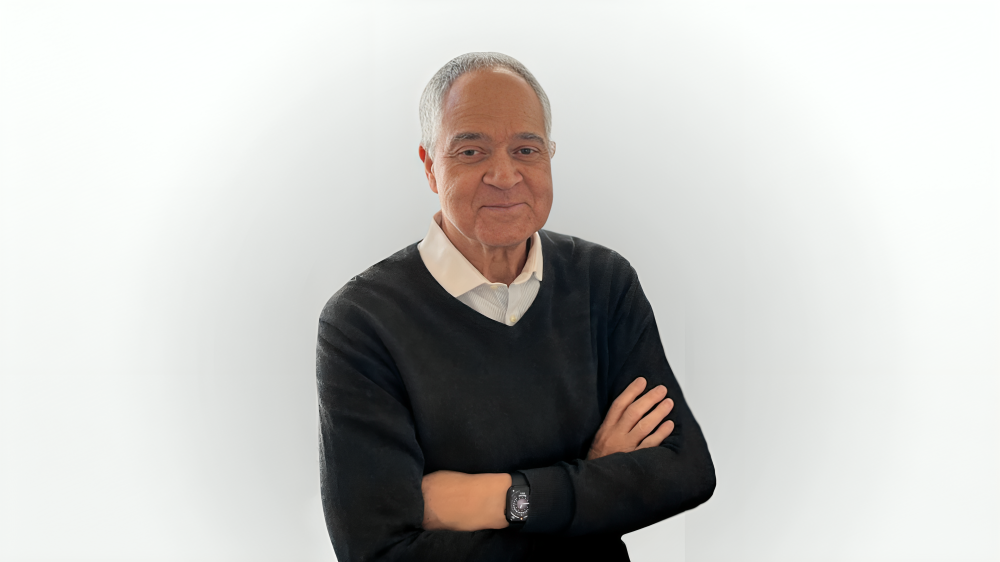

The humanitarian funding model that built the modern non-governmental organization (NGO) sector is coming apart. The preliminary data from the Organization for Economic Co-operation and Development (OECD) show aid fell 23.1% in 2025, the largest drop on record, with humanitarian aid down 35.8% and a further 5.8% decline projected for 2026. Bilateral aid to sub-Saharan Africa dropped 26.3% in 2025 and is projected to fall another 11.6% in 2026. Anyone launching a nutrition organization now is competing for a shrinking pool of money against incumbents with decades of donor relationships. Frederic Scheer, who founded the Scheer Foundation with Jocelyne Scheer in 2006, argues that the collapse does not kill the case for new entrants. It changes what a credible one has to look like on day one, and most of what founders instinctively build is the wrong thing.
Narrow The Mission Until It Can Be Measured
The first failure is usually ambition. Scheer is blunt about the gap between a slogan and a plan. “Ending malnutrition is not a plan,” he says. The foundation’s own mandate is deliberately small enough to count: reliable daily nourishment for children with no other safety net, meaning orphans and children in conflict zones. Since 2014 it has guaranteed daily food for roughly an aggregate of 20,000 children through local partners in seven countries, from Tanzania to South Sudan to Syria. That is a number a donor can audit. “Ending malnutrition” is not.
The discipline extends to geography, and this is where new organizations overreach hardest. Scheer applies three filters before entering a country:
- 1. The need must be extreme.
- 2. A trusted local partner must already exist.
- 3. The marginal dollar must change the outcome.
The third filter is the one founders skip. Where large agencies are withdrawing, a small and reliable funder matters more than it would in a crowded field, which makes retreat a signal rather than a warning. Even so, his instruction for anyone scaling is depth before breadth. Deepen and measure in the countries where partners already exist before opening the eighth. What he would do differently, given two decades of hindsight, is publish outcome data from the start: children reached, growth measured, and cost per child. Going global, he calls that non-negotiable.
Build Something That Does Not Need You
Most founders build organizations around their own judgment and call it leadership. Scheer treats it as a design flaw. “A founder’s job is to build something that does not need the founder,” he says, and the foundation’s practice follows from that. It works through organizations already caring for children, including the Mother Kareso Home Foundation in Lusaka, the Nasuti Yange Foundation in Uganda, and the Volunteer Alliance for Relief & Development (VARD) in South Sudan. Local professionals run operations. The partner holds the relationship with the community; the foundation secures the food. Money flows directly to local organizations, and Scheer treats the Grand Bargain’s 25% localization target as a floor rather than a ceiling.
The harder version of the same principle is exit design, planned before the first dollar moves. In Bungu, Tanzania, the foundation financed electricity, clean water, roads, and a cassava-processing plant, investing through a local company, FJS African Starch Development. It transferred that stake to the villages and local management in 2016 and stepped out of governance; the UN Capital Development Fund supported the operation that year. “Credibility comes from proving you can leave,” Scheer says. For a new global NGO, he prescribes governance that does not depend on founders at all: a majority-independent board including members from the countries served, an audit committee, audited accounts published annually, a written conflict-of-interest policy, and an independent evaluation partner whose livelihood does not depend on flattering results. Donors should see exactly how any investment vehicle is owned and when the organization exits.
Compete On Cost Per Outcome, Not On Technology
With funding this tight, the temptation is to brand the new organization around artificial intelligence (AI). Scheer’s formulation inverts that. “Be a cost-per-outcome organization that uses AI, not an AI organization that does nutrition.” He is candid that the foundation does not use AI today. His work in AI for healthcare tells him where it would earn a place in a partner-based model: remote monitoring of partner sites across multiple countries, growth screening so the organization reports outcomes rather than meals, and forecasting food needs before prices spike. Each of those attacks the same problem, which is proving measurable efficiency to funders who no longer fund intentions.
The caution is as instructive as the enthusiasm. A 2026 study in Nepal published in The Lancet Regional Health – Southeast Asia,found a smartphone 3D-imaging app met UNICEF’s 2025 standard for height measurement, but Scheer is precise about its limits: one study, one district, children aged two to five years. Most AI screening tools are not yet validated for routine use, and performance often drops in new populations. His rule is that no tool reaches a child without validation in that specific population, a manual fallback, and data governance that families and ministries can audit. On the money side, he urges diversification immediately across private philanthropy, outcome-based grants, government co-financing, and blended finance for local food production. Bungu, he notes, showed that model can attract institutional capital.
The landscape founders are entering will not resemble the one that produced today’s incumbents. The State of Food Security and Nutrition in the World (SOFI) 2026 shows Africa now has more hungry people than Asia, 309 million versus 292 million, for the first time on record. The OECD projects that Official Development Assistance (ODA) in 2028 will still be 6.6% below its 2025 level, Scheer expects that to mean fewer and larger results-based funders. The problem itself is shifting from calories to diet quality, with 35.5 million children under five overweight while 150 million are stunted, often in the same countries, a shift that drove the foundation’s decision to build a center for women survivors of abuse in Lusaka. And the data is becoming the currency: the joint estimates – UNICEF-WHO-WORLD BANK – cannot assess stunting progress for 20% of countries, so organizations that publish reliable outcome data will set the agenda. At the current pace, the world misses the 2030 stunting target by about 46 million children. Scheer’s advice to anyone starting now is to plan for a long game, not a campaign.
Follow Frederic Scheer on LinkedIn for more insights on humanitarian funding, child nutrition, and building locally owned NGOs.